Early permitting analysis
Evaluate expected emissions, air-quality modeling, emissions controls and permit requirements.
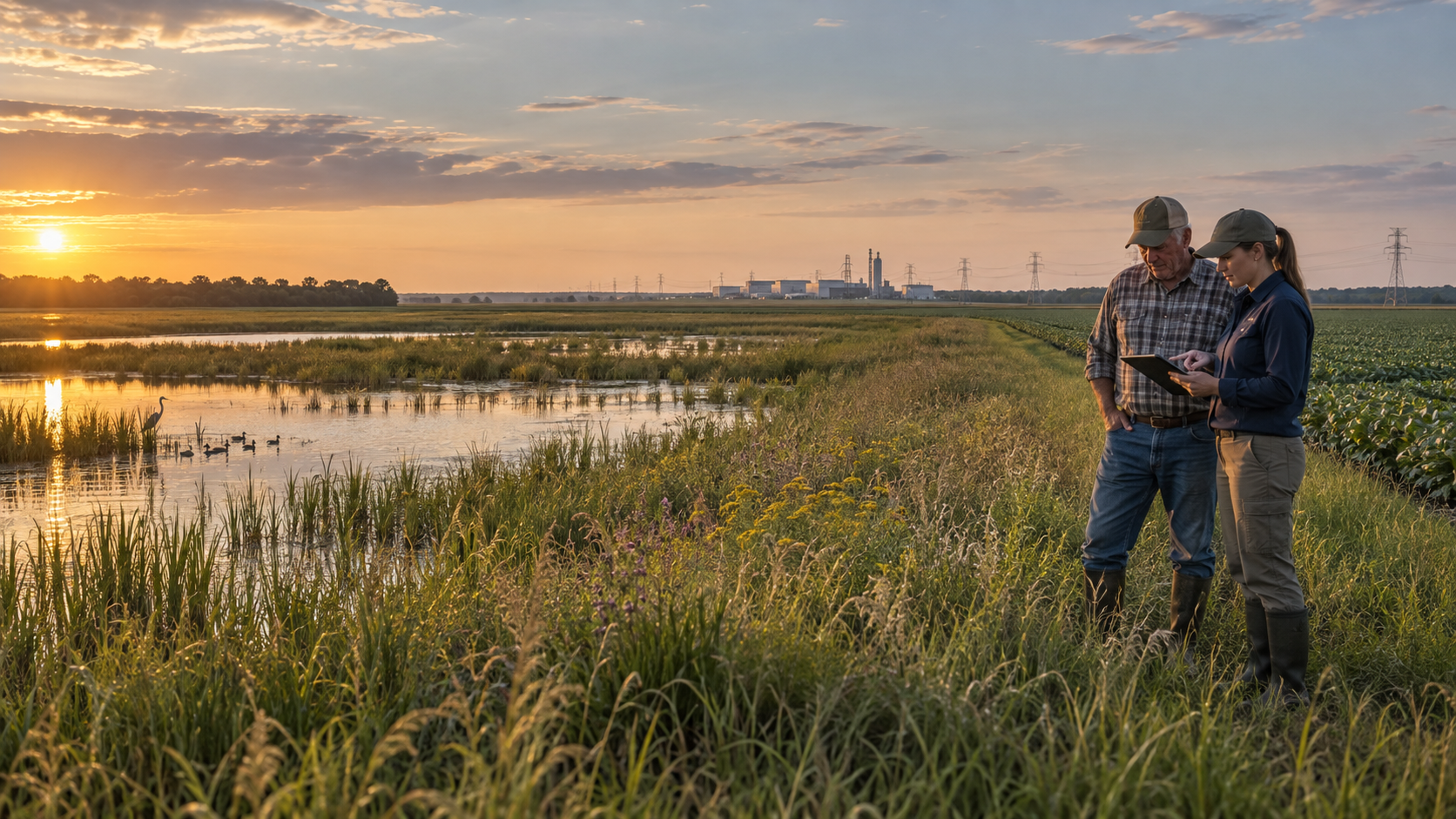
Environmental stewardship
Land, water, farms and neighbors shape the work. Long-term development requires attention to the place and the people around it.
Our philosophy
The Delta is a productive agricultural landscape shaped by water, soil and generations of land management. HyperCity's approach is to identify environmental constraints early, evaluate site options and incorporate responsible design measures as projects advance.
This page describes planning philosophy and evaluation areas. It does not represent a permit determination, final mitigation plan or commitment by a regulatory agency.
Energy and emissions
Air permitting, equipment selection and operating assumptions must develop together.
Evaluate expected emissions, air-quality modeling, emissions controls and permit requirements.
Generation that can operate when needed, evaluated with emissions controls, operating limits and fuel requirements.
Potential lower-carbon fuel pathways considered when technically viable, available and commercially supportable.
Advanced nuclear, storage, solar and wind options evaluated where suited to project requirements and development time horizons.
No technology description should be read as a final selection, emissions claim, fuel commitment or regulatory conclusion.
Land and water
Environmental studies should guide site selection and design from the outset.
Identify wetlands, study water flow and drainage, and plan appropriate buffers and stormwater controls.
Lower-consumption cooling and process options evaluated against reliability, cost and permit requirements.
Habitat review, vegetation, tree lines and reasonable buffers considered during site design.
Infrastructure placement should account for farming access, drainage, field geometry and neighboring operations.
Environmental site assessments, wetlands surveys, cultural-resource reviews and other studies suited to each project.
Responsible agencies set and enforce permit requirements. Projects must follow applicable monitoring, reporting and public review processes.
Questions
Send a question about permitting, water, land stewardship or the development process.
Contact the team